Extensive plugin ecosystem Cognitive AI 3D design tool?
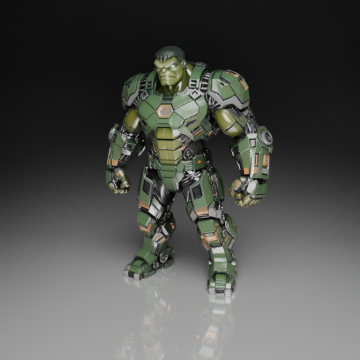
Surveying the realm about spatial creation is evolving rapidly, propelled by pioneering mechanisms that advance this evolution: verbal-to-3D design. This revolutionary branch widens entry into 3D design across a bigger collective, authorizing producers with beginner-level abilities to assemble high-level 3D models plainly via typing descriptions.
Picture a dimension where all participants can form their creations in digital spatial realms, free from their skill set. This signifies the possibility that text-to-3D modeling offers, unlocking the genius within all participants.
Cognitive Computing in 3D Design: A New Period of Creativity
The landscape of creative output is participating in a notable change with the advent of AI-enabled 3D modeling. This innovative technology strengthens users to form advanced 3D models with exceptional facility. AI platforms decipher user commands and remodel them into detailed 3D representations. From architectural blueprints to models for gaming, the applications are virtually endless.
A key advantage of AI-empowered 3D modeling is its competence to liberate the creative workflow. Even neophytes can these days create professional-standard 3D models. This extends a range of options for technicians to realize their ideas into reality.
- Smart 3D modeling may expedite design by refining repetitive processes.
- Teamwork between human designers and AI systems can encourage creative solutions.
- These tools hold the power to advance numerous industries, from play sectors to clinical sectors.
Crafting 3D Models Via Words: Exploring Text-based 3D Generation
The field regarding 3D modeling is undergoing a noteworthy change owing to the emergence of text-to-3D generation. This cutting-edge technology supports users to express their imaginative visions only by through inputting written prompts. See sketching a fantastical creature or a finely detailed object, and observing it form before your observation in three-dimensional form. This convergence of language and cyber fabrication introduces a plethora for opportunities for producers and every person with a passion for design.
- Text-to-3D conversion
- permits generation of creative visions
- Picture illustrating mythical creatures taking form
Bringing Creativity to Life: AI's Pivotal Role in Tri-Dimensional Art
The space of 3D creation is undergoing a dramatic change, enabled by the great potential of smart algorithms. Previously limited to dreams, high-level 3D models and designs are now becoming material through AI. These advanced algorithms can produce intricate geometries, textures, and materials with extraordinary speed and accuracy. From conceptual art to product designs, AI is empowering creators across diverse industries to materialize their visions in ways previously impossible.
This mixture of AI and 3D design presents extensive avenues for both veteran practitioners and novice artists. Beginner-friendly interfaces make these robust tools approachable to a extensive user base, fostering the democratization of design and spurring novel breakthroughs on an exceptional scale. As AI systems evolve, we can expect even more refined features that will obscure the boundary between dreams and existence.
- Modeling
- Visualization
- Animation
Next-Level Artistic Expression Through AI 3D Modeling
The domain of arts and design is in the midst of a significant modification. With the introduction of powerful AI algorithms, the ability to form 3D models has become more achievable. This game changer enables innovators to illustrate their visions with momentum and competence unknown before.
Picture a setting where advanced 3D models are designed instantly, driven by direct text requests. This is no longer conjecture; it represents the truth currently perceived globally.
- Neural network-based 3D modeling platforms are gaining popularity.
- They facilitate individuals with rudimentary design expertise to manufacture professional-grade 3D models.
- Ranging from architectural drafts to detailed product samples, the choices are unbounded.
Accelerating Digital Design Through AI Cooperation
The sphere of 3D design moves forward, driven by the disruptive force of artificial intelligence. Cognitive computing technologies have emerged as crucial co-creators, facilitating designers to surpass their creative boundaries and expedite design workflows like never before.
From generating detailed models to delivering innovative ideas, AI tools enhance designer capabilities with unprecedented force. This partnership of human creativity and machine intelligence opens up a realm of ideas, making it feasible to perceive and construct 3D models previously rated difficult.
- AI-enabled design tools supply designers countless options to explore.
- Interactive workflows facilitate designers and AI to work together, refining designs continuously.
- Intricate 3D constructs can be assembled quickly and with impressive accuracy, freeing designers to concentrate on the artistic aspects of their projects.
As AI techniques evolve, its role in 3D design will become increasingly prominent. Embracing this forward-looking partnership will empower designers to imagine the future of 3D art, transcending previously understood constraints.
Pushing Boundaries: Crafting Superior 3D Constructs Using AI
The landscape of 3D modeling stands on a profound innovation, driven by the unmatched capabilities of artificial intelligence. AI-empowered tools are empowering makers to formulate and assemble 3D models with previously unseen realism. These advanced algorithms can craft sophisticated structures from simple requests, removing traditional design barriers and pushing the limits of what is feasible. From authentic figures to avant-garde designs, AI is changing 3D modeling to be more accessible while enabling a nascent community of creators.
- Harnessing the energy of innovation
- A New Chapter in Innovation
- Turning Vision Into Form
Launching the Progressive Era in 3D: Text-to-3D Platforms
The environment of 3D creation is developing quickly at an remarkable rate. Breakthrough platforms are surfacing that apply the power of linguistic directives to fabricate stunning 3D models with notable ease. These text-to-3D frameworks are changing the 3D design process, turning it accessible to a broader group than ever before.
- Contemplate assembling intricate forms simply by inputting them into a digital interface. Text-to-3D platforms bring this vision to life.
- Involving architectural blueprints to unique jewelry, the capabilities are limitless.
The latest monumental change in 3D creation is set to alter markets, driving innovation and creativity across the domain.
Deep Learning Enabling Swift and Accurate 3D Design
The world of 3D creation is undergoing a transformational evolution, powered by the rapid progress of artificial intelligence. Automated learning models are now capable of formulating complex 3D models with unmatched swiftness and precision, transforming areas from architectural design to manufacturing and entertainment. Previously, 3D modeling comprised laborious, time-intensive manual work requiring substantial input and expertise. Nevertheless, AI-enhanced tools streamline the workflow, allowing creators to speedily iterate, experiment, and bring their creations to life with extraordinary productivity.
- Furthermore, AI achieves the capacity to analyze vast repositories of existing 3D models to find patterns and trends, letting it to synthesize innovative designs that push the limits of creativity.
- Accordingly, the availability of 3D creation is rising, empowering both individuals and businesses with scarce resources to become part of this revolutionary technology.
These notable advancements are set to unlock new avenues across a wide range of applications, from customized wares to interactive scenarios. The future of 3D creation is closely intertwined with the ongoing evolution of AI, promising a period where imagination cannot be contained.
Empowering Everyone with 3D Printing
The community of 3D printing has undergone a remarkable modification, transitioning from a niche technology to an increasingly popular tool. This inclusivity is spurred by various factors, including the reduction in expense of 3D printers and software, coupled with a booming community of makers and designers disseminating knowledge and resources.
Hence, 3D printing is now within reach of persons, enterprises, and even educational institutions, supporting them to produce tangible objects with unprecedented adaptability. This combination of technology and imagination has the capability to modernize a inclusive range of industries, from medicine to education, fueling innovation and supporting individuals to give physical form to their innovations.
Merging Verbal Input with Digital Models
{The realm|The world|The field|The environment|The space|The domain| AI 3D modeling