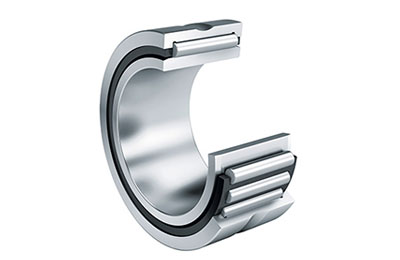
high compatibility FAG bearing assortments?

Pertaining to sound locomotion oversight within demanding deployments, FAG Mechanical Bearings represent the arena leader. Celebrated for their superior meticulousness, FAG units guarantee flawless, productive performance also during the most extreme conditions. From expedited rotors to durable machinery, FAG units offer the backbone for supreme productivity and sustainability.
Possessing a history covering a long period, FAG has consistently pioneered bearing solutions to serve the growing needs of different industries. Their inclusive product portfolio contains a vast collection of bearing categories, from spherical classes to custom designs customized for special engagements. FAG's determination to quality is evident in their rigorous construction procedures and exhaustive assessment standards.
- In addition, FAG delivers complete buyer support, encompassing know-how, usage directions, and service support.
- Finally, FAG bearings maintain status as the reference for precise locomotion oversight, generating peerless functionality, faithfulness, and lifespan among a range of fields.
Coolen Bearings: Designed to Handle Any Challenge
Coolen Radial Bearings are recognized for their extraordinary efficiency in even the most harsh environments. Spanning icy weather to burning thermal conditions, spanning forceful functions to uninterrupted spinning, Coolen Bearings consistently produce needs. Their leading-edge construction and careful manufacturing workflows secure that individual unit is prepared to survive the most rigorous pressures, yielding reliable and uniform functionality in their whole effective period.
- Utilizing exclusive components and forward-thinking features, Coolen Bearings curtail grind, decrease deterioration, and raise efficiency.
- Furthermore, Coolen Bearings afford a ample spectrum of configurations to fit the unique wants of several branches and deployments.
- All things considered, choosing Coolen Bearings means favoring components that are manufactured for long-term stability.
Selecting Bearings for Peak Performance
Realizing top-level output in revolving machinery relies heavily on the precise picking of bearing units. Aspects such as force endurance, velocity, surrounding factors, and grease needs all guide the perfect bearing type. A careful appreciation of these components, joined with expertise of existing bearing types, is essential for ensuring continuous productivity, lowering heat generation, and enhancing equipment lifespan. During testing bearings, carefully analyze the weight features, speed of rotation, and heat allowance. Moreover, take into account the required detailedness, sound dampening, and dirt proofing.
- Plain journal supports are optimized for primarily sideways pressures, while Directional devices specialize in withstanding longitudinal loads.
- Sleek devices give a plethora of weight thresholds and turn rates, rendering them multifunctional choices for multiple implementations.
- Flexible bearings allow for eccentricity mounted shafts and fixtures, lessening load and abrasion.
Leveraging maker's indexes and technical literature can give useful knowledge into specific bearing types and their functional properties.
Understanding Various Kinds of Bearings
Bearings carry out a key function in myriad mechanical frameworks. A bearing performs as a instrument designed to reduce heat buildup between spinning units. This diminution of friction grants flawless and functional progression.
Exist multiple forms of rotating supports, all presenting distinct different features and purposes. Popular categories contain:
- Sintered Bearings
- Agate Bearings
- Four-point Bearings
Let's explore these bearing categories in more depth.
Bearings: The Silent Workhorses of Industry
Bearings usually stay hidden when it comes to machinery. Still, these essential segments are the unsung heroes in maintaining frictionless and productive service. From tiny mechanical parts in our handheld devices to massive turbines activating manufacturing plants, motion components enable rotation with outstanding fineness, enabling effortless transition and lowering degradation.
- Without bearings, machinery would be plagued by excessive heat generation and rapid component failure.
- Numerous types of designs to fulfill multiple functions, from deep groove balls to cylindrical rollers and angular contacts, each optimized for different loads and speeds.
- Choosing the right bearings is mandatory to improve machine endurance, reduce breaks, and refine total efficiency.
Suppressing Vibrations by Efficient Bearings
Elite bearings provide a essential role in controlling resonance across a multitude of factory functions. This top-tier bearing styles incorporate ingredients and approaches that raise their load ability, robustness, and delicacy. By expertly lowering rubbing and moderating resonance at the revolving part, high-performance bearings enable better performance, increased effectiveness, and augmented equipment life.
These bearings also, these parts often contain advanced lubrication systems that curtail wear and tear, additionally strengthening their skill to dampen shaking and amplify output.
Applications utilizing high-performance bearings cover rotating machinery, vehicular equipment, precision instruments, and spaceflight systems.
Integrating high-performance bearings in these applications can significantly lessen noise, yielding a cluster of benefits such as:
- Reduced operational noise
- Enhanced equipment lifespan
- Elevated energy efficiency
- Improved product quality
By efficiently mitigating shaking locations, high-performance bearings hold a important role in ensuring seamless, constant, and effective activity among varied business fields.
Oiling Strategies for Extended Bearing Life
Rotating element serviceability is primarily contingent on adequate and steady oiling. Finding ideal lubricants and adopting effective lubrication systems are important for durable functioning and minimal downtime.
To enhance bearing longevity, attention must be paid to thermal environment, force parameters, and surrounding factors. Frequent checking of lubricant health is important to detect decay or pollution. Timely replacement of worn-out or contaminated lubricants helps prevent premature bearing failure.
Executing a fluid delivery routine designed for specialized conditions provides regular friction control in entire application period. This {involves determining the optimal lubricant type, viscosity grade, and application method based on manufacturer recommendations and industry best practices|requires selecting suitable lubricant form, thickness level, and application technique in accordance with maker guidelines and Bearings market standards|entails choosing proper oil variety, fluid density, and delivery process according to producer instructions and sector norms|includes picking apt friction modifier, viscosity degree, and implementation methodology following factory protocols and industry criteria|demands identifying fitting lubricant sort,